Social Engineering in 2025: Modern Tactics, Old Tricks
🎭 Social Engineering in 2025: Modern Tactics, Old Tricks Cyberattacks have evolved, but one element remains unchanged: humans are the weakest link. Even as organisations deploy firewalls, AI-based monitoring, and zero-trust controls, attackers continue to bypass everything by targeting people-not systems. Social engineering now combines age-old psychological manipulation with modern tools like AI-generated phishing, deepfake impersonation, and multi-channel deception. This breakdown explores how attacks are evolving and how organisations-especially SMEs and startups-can protect themselves.
Srinivasan Mahalingam
November 26, 2025
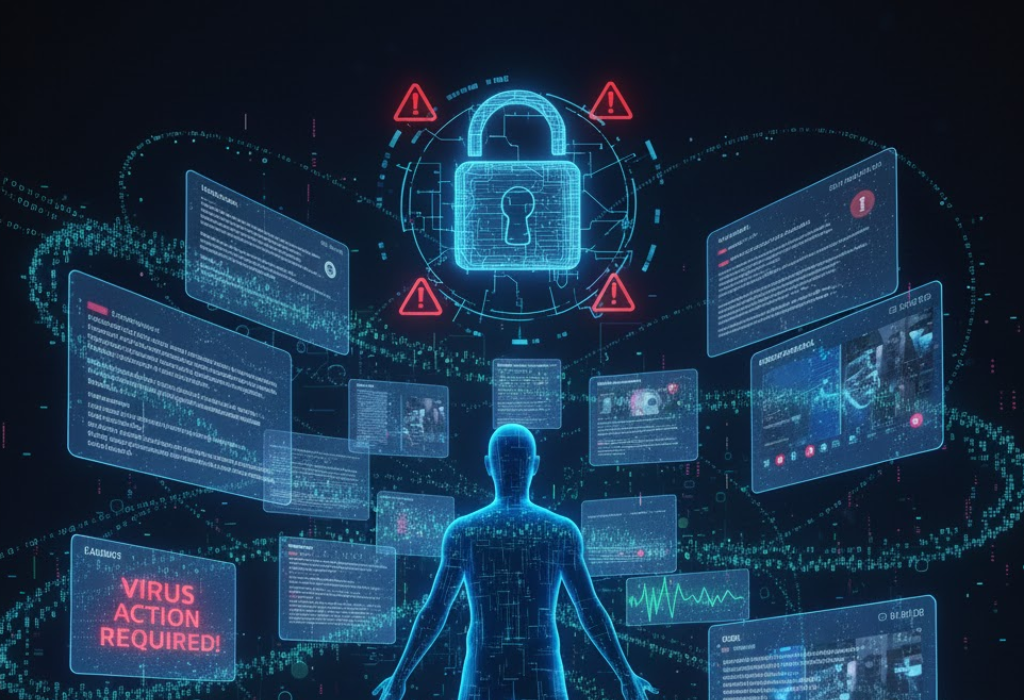
In 2025, attackers don’t break in - they log in using human weakness, deepfakes, and deception.
💡 1. Why Social Engineering Is Rising in 2025
According to the latest Unit 42 Incident Response Report, 36% of breaches between May 2024–May 2025 began with social engineering.
What changed:
✅ Attackers are scaling with generative AI and LLMs
✅ Deepfake audio, video & text impersonation is becoming mainstream
✅ Traditional awareness training is no longer enough
📎 Reference: Unit 42, CrowdStrike, KPMG, arXiv
📧 2. Latest Phishing Methods
Phishing still accounts for nearly 65% of all social engineering attacks in 2025.
Key trends:
✅ Legitimate platforms used as delivery vectors (cloud links, not attachments)
✅ Brand impersonation and targeted C-suite spear phishing
✅ AI-crafted emails that bypass filters
📎 Reference: KnowBe4, Hoxhunt, ZeroThreat
📱 3. Rise of Vishing, Smishing, & Voice Impersonation
Vishing attacks grew by 449% in 2025. Attackers call employees posing as IT, vendors, or leadership, requesting credentials or access.
Example:
✅ Fake IT support requesting remote-desktop installation.
📎 Reference: KnowBe4
🎭 4. Pretexting & Impersonation
Attackers craft believable scenarios-CEO requests, vendor updates, payroll changes-to manipulate employees into taking action.
📎 Reference: Verizon DBIR
🌀 5. Deepfake-Driven Attacks - The New Frontier
Deepfake audio, video, and live impersonation now make social engineering nearly indistinguishable from legitimate communication.
Examples:
✅ Deepfake CTO instructing access changes
✅ AI-generated video calls impersonating executives
✅ Fake social profiles powered by GenAI
📎 Reference: Reality Defender, CrowdStrike, KPMG
🧠 6. Old Tricks Still Work - Here’s Why
Attackers continue exploiting core human biases:
✅ Authority (“This is the CFO. Approve this now.”)
✅ Urgency (“You must act immediately.”)
✅ Familiarity (“We spoke last week-please confirm.”)
✅ Social proof (“Others already approved this.”)
Despite tech advances, people remain the primary vulnerability.
🛡️ 7. Prevention Strategies - Technical Controls
✅ Enforce MFA across all accounts
✅ Use behavioural-based anomaly detection for phishing
✅ Implement Zero Trust & least privilege
✅ Deploy deepfake detection & voice biometrics
✅ Run regular simulations (phishing, vishing, deepfake scenarios)
📝 8. Governance & Process Controls
✅ Mandatory verification steps for financial approvals
✅ Incident response playbooks for social engineering
✅ Vendor risk management & supply chain checks
✅ Regular cybersecurity assessments aligned with transformation projects
👥 9. People & Culture
✅ Replace annual training with ongoing awareness
✅ Encourage reporting suspicious calls/emails
✅ Run red-team or tabletop simulations
✅ Provide SME/startup-specific training modules
🏢 10. Tailored Controls for SMEs & Startups
SMEs are increasingly targeted due to weaker controls and smaller teams.
Recommendations:
✅ Use cost-effective managed security services
✅ Adopt vCISO for governance & gap analysis
✅ Prepare for deepfake call scenarios
✅ Implement basic but strong verification workflows
🔗 11. Mapping Key Services to Social Engineering Risks
✅ Managed Security Services → Detect human-layer threats
✅ Cybersecurity Assessment → Identify weak points in processes
✅ vCISO → Strategic oversight for SMEs/startups
✅ Data Privacy & Protection → Prevent unauthorized access to personal data
✅ GRC & ISO Audits → Strengthen governance & compliance
✅ Incident Response → Reduce impact of social engineering breaches
✅ Cloud Security → Prevent misconfigurations exploited through human vectors
✅ Security Awareness Training → Build resilience
📅 12. Your 90-Day Action Plan
✅ Conduct a social engineering risk assessment
✅ Roll out verification procedures for key actions
✅ Train employees on vishing, smishing & deepfake scenarios
✅ Run phone, video & email simulations
✅ Review cloud access, MFA & vendor controls
✅ Conduct IR drills for impersonation events
✅ Engage vCISO or MSSP if you're an SME/startup
✅ Align risk assessments with ISO 27001 & GDPR
✅ Track KPIs: click rates, reporting rates, detection rates
🏁 Conclusion
In 2025, attackers use sophisticated AI tools to exploit timeless human weaknesses. Organisations cannot rely solely on firewalls or compliance documents. A modern defence must combine technology, governance, culture, and verification.
Strengthening social engineering resilience requires a human-centric approach-and partnering with experts like Habilesec can accelerate that journey.